
English
Views: 0 Author: Site Editor Publish Time: 2026-01-01 Origin: Site


The mechanics of a marine vessel involve complex physics, but the business purpose of a Bilge Water Separator (often called an Oily Water Separator or OWS) is strictly regulatory survival. This system stands as the critical barrier between a vessel and severe MARPOL fines, port state detentions, or criminal negligence charges. While the engine room crew sees a machine that filters water, the fleet manager sees a compliance device that must function perfectly under scrutiny.
At its core, this system is a multi-stage treatment unit designed to reduce the oil content in bilge water to legal discharge limits, typically 15 parts per million (ppm). However, achieving this standard is rarely as simple as letting oil float to the top. Modern vessel operations create chemical emulsions and mechanical mixtures that defy basic gravity separation.
In this article, we move beyond basic definitions. We will explore the specific engineering principles that ensure compliance with IMO resolution MEPC 107(49). You will learn how modern systems handle stable emulsions, why pump selection is often the silent killer of efficiency, and how to prevent the operational failures that lead to port state control violations.
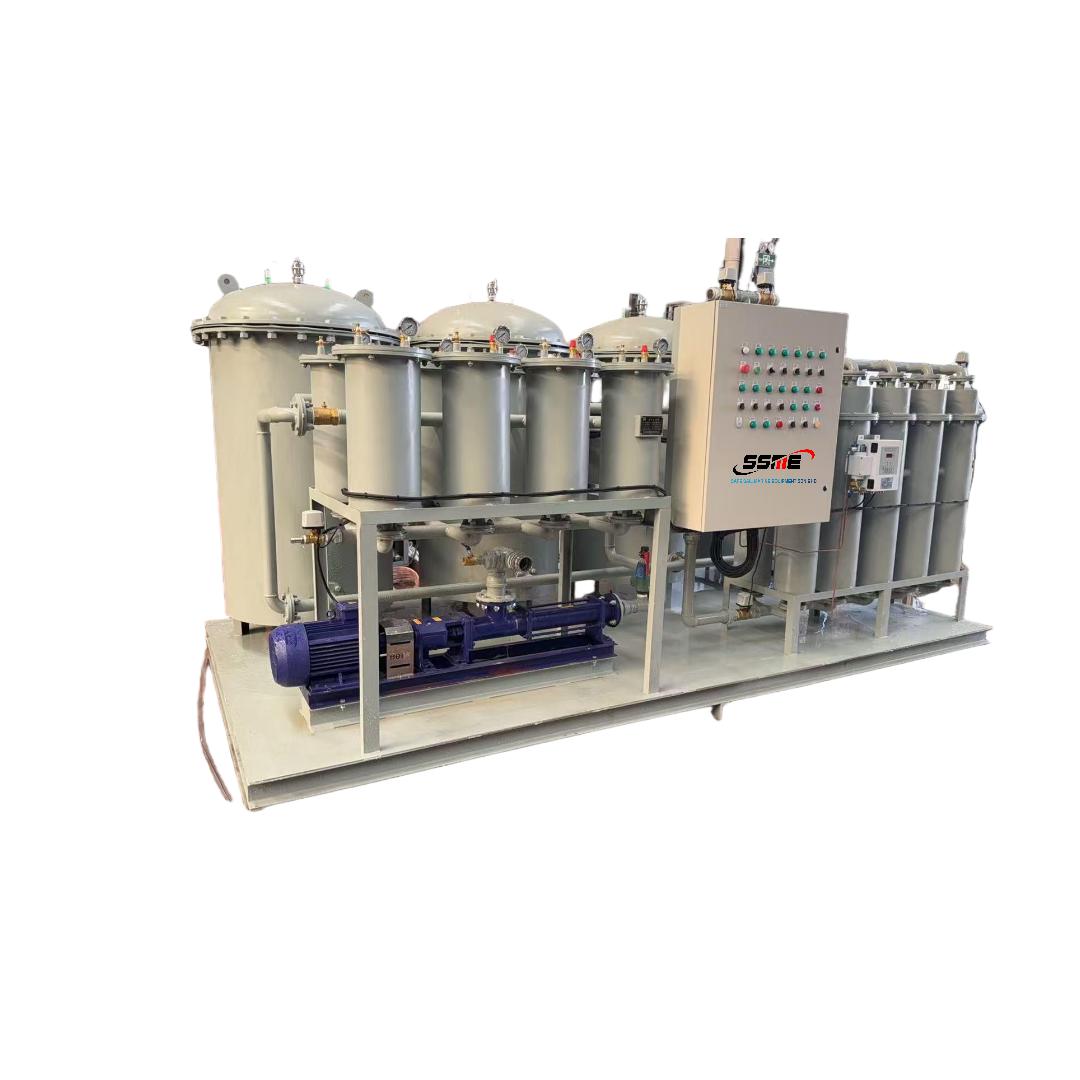
The 15 ppm Threshold: The mechanical goal is not "clean water" but "compliant water" (<15 ppm oil content).
Pump Selection Matters: Why using centrifugal pumps often destroys separator efficiency by creating emulsions (shearing).
Three-Stage Defense: Modern systems rely on Separation (Gravity) → Coalescing (Polishing) → Monitoring (OCM).
The "Chemical" Threat: How using the wrong cleaning agents in the engine room renders even the best separators useless.
Before dissecting the machinery, we must understand the rules that dictate its design. The operational parameters of any Bilge Separator are governed by the International Maritime Organization (IMO) under MARPOL Annex I, Regulation 4. These regulations transform a simple filtration task into a rigorous legal requirement.
The current industry standard, MEPC 107(49), introduced strict testing protocols that older equipment cannot meet. Three specific pillars define this standard:
The 15 ppm Limit: This is the hard line for discharge. Any effluent containing more than 15 ppm of oil cannot be pumped overboard while the ship is en route. It must be retained on board or recirculated.
Tamper-Proof Monitoring: Modern systems require a "fail-safe" Oil Content Monitor (OCM). This device records date, time, and alarm status. Crucially, it is designed to prevent crew members from easily bypassing the sensor or manipulating the data log, a practice that historically led to massive fines.
Type C Emulsions: Perhaps the most significant engineering challenge is the requirement to handle "Type C" emulsions. These are stable mixtures where oil is chemically bonded to water, often due to detergents. Old gravity separators could not break these bonds; modern units must demonstrate the ability to separate them.
While the law permits 15 ppm, savvy technical superintendents rarely aim for that exact number. Sensors drift. Conditions change. If a system runs consistently at 14 ppm, a slight calibration error or a sudden influx of sludge will trigger an alarm—or worse, an illegal discharge.
Therefore, buyers should look for systems rated for performance levels closer to 5 ppm or even 1 ppm. This engineering "safety margin" provides a necessary buffer against sensor drift and rigorous Port State Control inspections.
To extract oil from water, engineers leverage physical differences between the two substances. A high-quality Bilge Water Separator typically employs a three-stage defense strategy to achieve the required purity.
The first stage relies on specific gravity. Since oil is generally lighter than water, it naturally wants to float. This process is governed by Stokes’ Law, which dictates how fast a droplet rises based on its density and size.
Inside the primary chamber, baffles and catch plates are used to manipulate flow. These physical barriers reduce turbulence, known as laminar flow, allowing oil droplets to rise to the surface without being swept away by the current. Heavy solids and sludge sink to the bottom for drainage.
Limitation: Gravity separation is effective but limited. It generally works well for large oil droplets but fails against micro-droplets (smaller than 50 microns). A gravity-only system typically reduces oil content down to roughly 100 ppm—far above the legal 15 ppm limit.
To bridge the gap between 100 ppm and 15 ppm, the system uses coalescence. This is the process of merging microscopic oil droplets into larger, buoyant drops. This stage often utilizes oleophilic (oil-attracting) media, such as polypropylene plates or ceramic beads.
As dirty water passes through this media, the surface tension of the oil causes it to stick to the oleophilic material. Thousands of tiny droplets accumulate on the surface until they merge into a single large drop. Once the drop becomes large enough, its buoyancy overcomes the bond to the media, and it floats to the surface to be skimmed off.
This stage is critical for handling mechanical emulsions. While it cannot easily break chemical bonds, it is highly effective at capturing the "haze" of oil that escapes the primary gravity chamber.
For vessels requiring ultra-pure effluent or those operating in sensitive environments like the Antarctic, a third "polishing" stage is added. This often involves activated carbon filters or organoclay cartridges. These materials utilize adsorption to chemically capture trace amounts of oil and even some dissolved chemical contaminants, bringing the effluent quality close to zero ppm.
Understanding the flow path helps crew members diagnose issues before they trigger alarms. The following workflow describes a standard MEPC-compliant setup.
The process begins with the pump, and this is where many installations fail. Engineers prefer Positive Displacement Pumps (such as screw or Moineau pumps) over Centrifugal pumps.
Centrifugal pumps operate at high speeds and shear fluids. This shearing action chops large oil droplets into millions of microscopic ones, creating a mechanical emulsion that is incredibly difficult to separate. Positive displacement pumps move water gently, preserving the droplet size and allowing the downstream Bilge Separator to function efficiently.
Bilge water enters the primary tank. Here, heating coils may be used to raise the temperature of the fluid. Heating lowers the viscosity of the oil and increases the density difference between oil and water, accelerating separation. Free oil accumulates at the top and is periodically skimmed into a dedicated waste oil tank.
The partially treated water, now free of heavy sludge, moves to the secondary stage. It is forced through fine mesh or coalescing beads. This stage targets the elusive micro-droplets. The flow rate here is critical; if the water moves too fast (reducing residence time), the oil won't have time to coalesce and will carry over into the discharge.
Before any water leaves the ship, it passes through the Oil Content Monitor (OCM). This sensor constantly samples the effluent using light scattering or turbidity measurement principles.
The OCM controls a pneumatic 3-way valve. The logic is binary and strict:
If <15 ppm: The valve opens to the overboard discharge line.
If >15 ppm: The valve switches to "Recirculate" (or "Return"), sending the water back to the bilge holding tank for re-processing.
To prevent fouling, modern units run automatic cleaning cycles. They use fresh water to back-flush the filters and clean the OCM sensor glass. Neglecting this fresh water supply is a common cause of sensor failure.
| Component | Function | Common Failure Mode |
|---|---|---|
| Feed Pump | Transfers bilge water to OWS | Shearing oil into emulsion (wrong pump type) |
| Coalescer | Merges micro-droplets | Clogging due to solids/particulates |
| OCM | Measures ppm levels | Dirty sensor glass reads false high |
| 3-Way Valve | Directs flow (Sea vs. Bilge) | Stuck solenoid or air leak |
Even the most expensive Bilge Water Separator will fail if it is operated incorrectly. Experience shows that "mechanical failure" is often actually "chemical failure" or operational neglect.
The most common enemy of an OWS is soap. Surfactants found in degreasers, hand cleaners, and deck washes are designed to bind oil to water. When these chemicals enter the bilge, they form stable emulsions that no physical barrier can separate.
This creates a chemical failure state where the separator functions mechanically, but the physics of separation are rendered impossible. To solve this, vessel managers must enforce an "OWS-friendly" purchasing policy. Only "quick-break" detergents, which separate from oil after a short period, should be used in the engine room.
Two specific maintenance tasks are frequently overlooked, leading to downtime:
Sensor Fouling: The OCM uses optical sensors. If the glass becomes coated with oil or biofilm, the monitor will read a high ppm value even if the water is clean (a false positive). This locks the 3-way valve in recirculation mode, making discharge impossible.
Sludge Buildup: The oil collection chamber must be drained regularly. If the automatic drain valve fails or manual draining is neglected, the oil layer will thicken until it reaches the water outlet, flushing pure oil into the second stage and ruining the coalescing filters immediately.
Finally, sizing matters. If a separator is undersized for the pump feeding it, the fluid velocity inside the chamber exceeds the "rise rate" of the oil. The oil is swept along with the water stream before it can float to the surface. This violates the residence time requirement—the minimum time water must stay in the chamber for physics to do its work.
When retrofitting a vessel or specifying new builds, three factors should drive the decision.
Matching the flow rate (GPM or m³/h) to the vessel is nuanced. While you need enough capacity to handle the daily bilge generation, oversizing is dangerous. A unit that is too large for the volume of bilge water generated runs infrequently. This leads to stagnation inside the unit, promoting anaerobic bacterial growth and corrosion. Choose a capacity that matches the operational tempo.
The purchase price is only the entry fee. The real cost lies in consumables and labor. Evaluate the cost of replacement coalescers and adsorption filters. How often do they foul in real-world conditions? Furthermore, assess maintenance access. Does the crew need to disassemble piping to reach the plates, or does the unit feature "EZ access" hatches? Complex maintenance procedures guarantee that maintenance will be skipped.
Ensure the equipment carries Type Approval Certificates from major classification societies and meets USCG standards if trading in US waters. Crucially, verify its ability to handle Type C emulsions without requiring expensive daily chemical dosing. Systems that rely heavily on flocculants to work are expensive to operate and complicate supply chain logistics.
A Bilge Water Separator operates on the principles of physics, but it succeeds on the quality of its engineering and the discipline of its operators. From the gravity separation of large droplets to the coalescing of microscopic haze, every stage must function in harmony to satisfy the strict 15 ppm limit of MARPOL.
For vessel owners, the cost of a reliable, high-spec separator is always lower than the cost of a single environmental violation. Investing in positive displacement pumps, enforcing strict detergent policies, and selecting equipment with a performance safety margin are not just technical choices—they are strategic business decisions.
Call to Action: Review your current OWS performance logs and pump types before your next dry dock or inspection. Identifying a pump mismatch or chronic emulsion issue today can save your fleet from detention tomorrow.
A: These terms are often used interchangeably in the maritime industry. However, "Oily Water Separator" (OWS) is a broader term that can apply to industrial land-based systems (like refineries). "Bilge Separator" specifically refers to marine units designed to treat bilge water on ships according to IMO MARPOL regulations. Both perform the same core function of removing oil from water.
A: If the OCM malfunctions or loses power, the system is designed to "fail-safe." This means the 3-way valve should automatically default to the recirculation or closed position, preventing any discharge overboard. You cannot legally discharge bilge water without a functioning, calibrated OCM.
A: No. You must use "quick-break" cleaning agents. Standard household detergents or heavy industrial degreasers often contain surfactants that create stable emulsions. These emulsions bind the oil to the water so tightly that the separator cannot physically remove the oil, leading to constant high-ppm alarms and discharge inability.
A: Constant alarms usually stem from three causes: the presence of chemical emulsions (from wrong detergents), dirty sensor glass inside the OCM (reading false high oil levels), or a flow rate that is too high for the unit (preventing separation). Check the sensor cleanliness first, then review recent cleaning chemicals used in the engine room.


