
English
Views: 0 Author: Site Editor Publish Time: 2026-01-29 Origin: Site


Industrial fire safety depends on one critical factor: reliable water delivery under pressure. Even the most advanced Firefighting Equipment cannot perform if water fails to reach the fire zone at the required flow and pressure. In large industrial facilities, municipal water supply is often insufficient during emergencies. This is where Fire Pumps play a decisive role. They boost pressure, stabilize flow, and support rapid suppression across complex systems. In this article, you will learn how Fire Pumps function in industrial applications, how they are selected and configured, and why they remain the backbone of modern industrial fire protection strategies.
Industrial sites often span wide areas and include tall structures. Pressure losses increase with distance and elevation. Fire Pumps solve this by boosting water pressure to reach remote and elevated zones. Without them, sprinklers and hydrants may deliver insufficient flow during critical moments. A properly designed fire pump system ensures water arrives quickly and consistently. It stabilizes system pressure across the network. This capability is vital for factories, plants, and campuses where fire loads are high and response time matters. Reliable pressure directly supports effective suppression and safer outcomes.
Industrial fire protection rarely relies on one system alone. Sprinklers, hydrants, foam systems, and water-mist solutions often operate together. Fire Pumps supply the consistent flow needed to support simultaneous activation. They balance demand across different zones without pressure collapse. This coordination is critical in complex layouts where fires may spread quickly. By maintaining steady delivery, fire pumps allow each system to perform its role. The result is controlled fire growth and reduced escalation. Integrated pumping capacity strengthens the entire Firefighting Equipment network.
Fast and effective fire suppression protects people first. It also limits damage to buildings, equipment, and inventory. Fire Pumps improve response speed by delivering water immediately when pressure drops. This rapid action supports early control of fires. In industrial environments, even small delays can cause major losses. Reliable pumps reduce downtime and help operations recover faster. They also support compliance goals tied to insurance and safety audits. In this way, fire pumps directly contribute to safer workplaces and stronger business continuity.
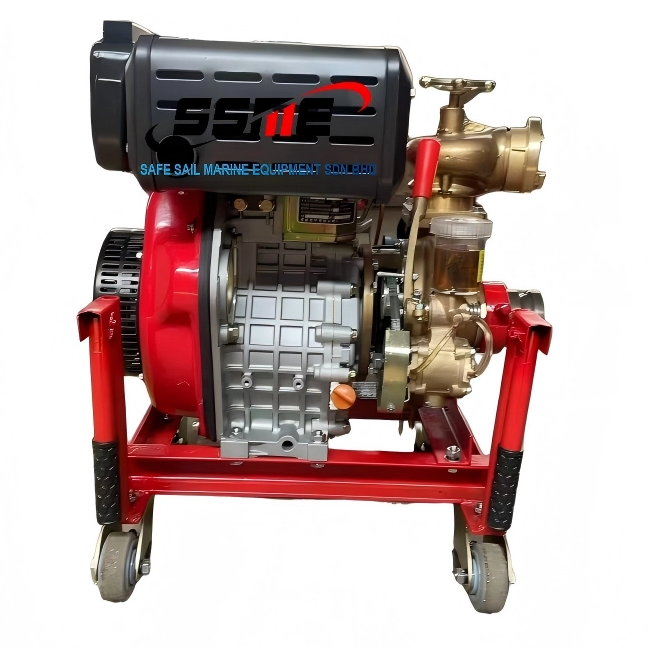
Facilities handling flammable or reactive materials require fast and stable fire suppression. Fire Pumps in these environments must activate quickly and sustain pressure. They often support foam-water systems designed for liquid fuel fires. Consistent flow ensures foam blankets remain effective. Hydrant networks also rely on pumps for manual intervention. In these settings, reliability is non-negotiable. Pumps are selected to handle harsh conditions and continuous readiness. Their performance under pressure protects workers and prevents fire escalation across interconnected process areas.
High-density warehousing and logistics centers place extreme demands on fire protection systems. Tall racks, long pipe runs, and wide floor areas require Fire Pumps that can deliver high flow and stable pressure as core Firefighting Equipment, ensuring suppression systems perform effectively at the most remote and elevated points.
| Aspect | Technical Indicators (Typical Values) | Units | Application in Warehouses & Logistics | Key Considerations |
|---|---|---|---|---|
| Storage Height | 10–40 (high-piled storage common) | m | Automated warehouses, high-bay storage | Higher racks increase required discharge pressure |
| Protected Area Size | 20,000–100,000+ | m² | Distribution centers, fulfillment hubs | Large footprints demand higher total system flow |
| Required Sprinkler Density (ESFR) | 12–20 | mm/min | High-challenge commodity storage | Dictates minimum pump flow capacity |
| Total System Flow Demand | 3,000–12,000 | L/min | Simultaneous ESFR or multiple-zone activation | Must account for worst-case operating area |
| Pump Discharge Pressure | 0.7–1.2 | MPa (7–12 bar) | Remote rack levels and long pipe runs | Pressure losses increase with distance and elevation |
| Pipe Network Length | 300–1,000+ | m | Large logistics halls | Friction loss must be included in hydraulic calculations |
| Preferred Pump Type | Horizontal split case | — | Large-volume industrial applications | Chosen for high flow and ease of maintenance |
| Pump Redundancy | Main + standby pump | — | 24/7 logistics operations | Reduces risk of single-point failure |
| Water Supply Source | Ground tank or reservoir | m³ | High-demand sprinkler systems | Volume must support full-duration discharge |
| Fire Zone Segmentation | 2–6 zones per building | — | Fire compartmentalization | Pumps must sustain flow if multiple zones activate |
Data centers, power plants, and transport hubs demand uninterrupted protection. Fires in these facilities can impact public safety and essential services. Fire Pumps ensure dependable water delivery even during power instability. They support suppression systems designed for sensitive equipment and confined spaces. Reliable pressure allows controlled response without over-application. In complex facilities, pump systems integrate with alarms and monitoring platforms. This coordination enhances situational awareness and response precision. Fire pumps thus play a central role in protecting critical operations.
Different industrial sites require different pump designs. Horizontal split case pumps handle high flows and allow easy maintenance. End suction pumps suit compact installations with moderate demand. Vertical turbine pumps access deep or below-grade water sources. Each type supports specific hydraulic needs. Selecting the right design ensures efficient operation and long service life. Matching pump type to site conditions improves reliability. This alignment strengthens the overall Firefighting Equipment system and simplifies long-term management.
Selecting between electric and diesel-driven Fire Pumps requires a risk-based evaluation of power reliability and site criticality. Electric pumps are typically preferred for their stable output, lower emissions, and reduced maintenance when supported by a dependable electrical grid. Diesel pumps, governed by NFPA 20 requirements, provide autonomous operation during grid failure and must sustain rated output for extended durations, often eight hours or more. Many industrial facilities deploy both as primary and standby units, ensuring continuous fire protection even under compounded emergency conditions.
Jockey pumps play a critical control role within industrial fire protection networks by maintaining static system pressure within a narrow band. Properly sized jockey pumps typically deliver small flows at pressures slightly above system setpoints, preventing pressure decay from minor leaks or temperature-related fluctuations. This avoids frequent main pump starts, which can accelerate mechanical wear and electrical stress. Accurate pressure switch calibration and coordinated setpoints between jockey and main pumps are essential, ensuring immediate response readiness without compromising long-term system reliability.
NFPA 20 provides detailed, engineering-based rules that directly affect fire pump performance during real fire events. It specifies minimum suction pipe lengths, allowable pipe velocities, and acceptable pressure drops to prevent cavitation and hydraulic instability. The standard also defines driver requirements, such as dedicated power supplies and automatic starting logic, ensuring pumps activate without human intervention. By enforcing acceptance testing and documented performance verification, NFPA 20 helps industrial facilities achieve repeatable, predictable fire protection outcomes across different sites.
UL Listing and FM Approval represent independent verification that Firefighting Equipment can perform reliably under controlled fire conditions. Certification testing evaluates full-load endurance, pressure stability, material strength, and failure modes beyond normal operating ranges. Insurers often reference these approvals to quantify risk, while engineers rely on them to standardize system design across global projects. For industrial operators, certified Fire Pumps reduce uncertainty during audits, simplify insurance negotiations, and demonstrate alignment with internationally recognized fire safety benchmarks.
In industrial fire protection, certified equipment is only the baseline. Day-to-day reliability depends on measurable performance under real operating conditions. Industrial operators evaluate Fire Pumps by how consistently they deliver flow and pressure, tolerate harsh environments, and sustain full-load operation as part of critical Firefighting Equipment systems.
| Performance Criterion | Technical Indicators (Typical Values) | Units | Industrial Application | Key Considerations |
|---|---|---|---|---|
| Rated Flow Capacity | 1,500–10,000+ | L/min | Warehouses, refineries, power plants | Must meet worst-case hydraulic demand, not average load |
| Rated Discharge Pressure | 0.4–1.2 | MPa (4–12 bar) | High-rise and large-area facilities | Pressure should remain stable at 100% flow |
| Pressure Stability | ≤ ±5% fluctuation during operation | % | Simultaneous sprinkler and hydrant use | Excess fluctuation may impair suppression effectiveness |
| Continuous Operation Time | ≥ 8 hours (diesel) Continuous duty (electric) | h | Industrial plants, critical infrastructure | Required for prolonged firefighting scenarios |
| Pump Efficiency | 65–85 (depending on type) | % | Energy-sensitive industrial sites | Higher efficiency reduces thermal stress and wear |
| Net Positive Suction Head (NPSHr) | 2–6 | m | Sites with tanks or reservoirs | Must be lower than available NPSH to avoid cavitation |
| Operating Temperature Range | –10 to +40 (standard) Up to +50 with upgrades | °C | Outdoor or harsh environments | Ambient limits affect engine and motor reliability |
| Material Compatibility | Cast iron, ductile iron, bronze, stainless steel | — | Marine, chemical, or corrosive sites | Material choice must match water quality and exposure |
| Full-Load Endurance | 100% rated load without performance drop | — | Annual flow and endurance testing | Verified during acceptance and periodic testing |
| Vibration Level | ≤ 4.5 (ISO 10816 reference) | mm/s RMS | Long-term mechanical reliability | Excess vibration accelerates bearing and seal wear |
| Starting Performance | Electric: ≤ 10 s Diesel: ≤ 15 s | s | Emergency response readiness | Slow starts reduce early suppression effectiveness |
Tip:When assessing fire pump performance, operators should compare rated values against actual site conditions. Reviewing test curves, endurance data, and material specifications together provides a far more reliable basis for selection than relying on nameplate ratings alone.
Proper sizing ensures water reaches every required point. Designers account for friction loss, elevation change, and peak demand. Fire Pumps must handle worst-case scenarios. Under-sizing risks inadequate suppression. Accurate calculations support balanced performance. This process aligns pump output with system needs. It also avoids excessive energy use. Correct sizing underpins effective Firefighting Equipment deployment.
Configuration depends on site layout and growth plans. Standalone pumps suit simple systems. Manifolded setups support redundancy and expansion. Containerized solutions offer rapid deployment and mobility. Each option addresses different operational needs. Choosing the right configuration improves scalability. It also simplifies installation and future upgrades. Flexible design supports long-term site evolution.
Water sources vary by location. Municipal supply, tanks, reservoirs, or wells may be used. Fire Pumps must match source characteristics. Vertical turbine pumps suit deep sources. Storage tanks support reliable volume. Integration ensures consistent suction conditions. Proper alignment prevents cavitation and performance loss. This integration step is critical for system reliability.
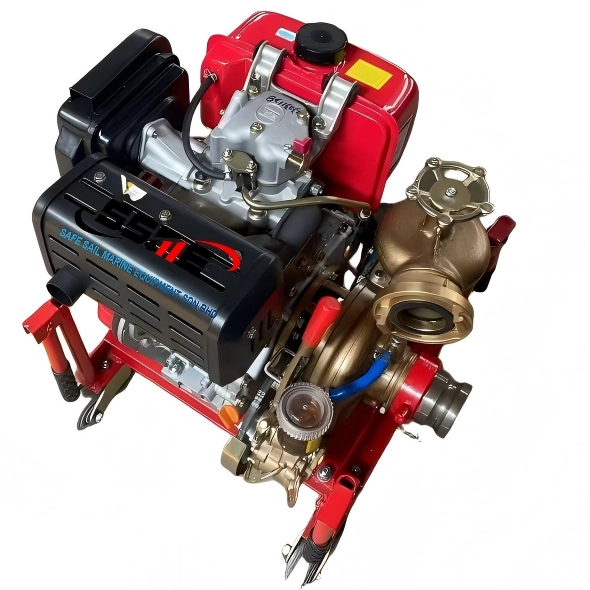
Effective inspection and testing of Fire Pumps follow defined technical standards rather than ad-hoc checks. Weekly inspections focus on pump room conditions, valve positions, controller status, and abnormal noise or vibration. Monthly tests verify automatic start functions and pressure response under no-flow conditions. Annual flow testing measures actual performance against the pump curve using calibrated instruments, confirming rated flow and pressure. Recording results over time helps identify performance drift, supports regulatory compliance, and ensures personnel remain familiar with real emergency operating procedures.
In industrial fire protection, smart monitoring and system integration transform Fire Pumps from passive machinery into responsive, data-driven Firefighting Equipment. By combining sensors, certified controllers, and building or fire alarm systems, operators gain real-time visibility into system health and can respond faster, with greater confidence and control.
| Module Category | Monitoring / Integration Function | Typical Technical Parameters (Examples) | Application Scenarios | Key Considerations |
|---|---|---|---|---|
| Pressure Sensors | Continuous monitoring of discharge and system pressure | Range: 0–1.6 MPa (0–16 bar) Accuracy: ±1% FS Signal: 4–20 mA | Main pump and jockey pump discharge lines | Install at stable pressure points; avoid water hammer zones |
| Flow Monitoring | Confirms actual water delivery after pump start | Range: 0–10,000 L/min Units: L/min or m³/h | Annual performance checks, system validation | Cannot replace NFPA-required full-flow tests |
| Pump Status Monitoring | Tracks start/stop events and runtime | Start time: ≤10 s (typical diesel pump) Runtime logging: hours | Main and standby fire pumps | Data retention is critical for audits |
| Motor / Engine Monitoring | Monitors electrical or mechanical health | Motor current: A Bearing temperature: °C Speed: rpm | Electric and diesel-driven pumps | Overcurrent or overheating must trigger alarms |
| Fire Pump Controller Integration | Automatic start, sequencing, and interlocks | Compliant with NFPA 20 logic Manual/Auto modes | Dedicated fire pump rooms | Must remain independent from non-fire controls |
| Alarm & Event Logging | Records pressure drops, failures, and faults | Alarm response time: ≤1 s | 24/7 operations and maintenance | Alarm prioritization prevents operator fatigue |
| BAS / BMS Integration | Centralized visualization and status display | Protocols: Modbus TCP, BACnet | Industrial campuses, data centers | Integration must not compromise fire system autonomy |
| Remote Monitoring | Off-site access to real-time and historical data | Data refresh rate: 1–5 s | Multi-site or unmanned facilities | Requires secure network architecture |
| Data Analytics | Trend analysis and predictive maintenance | Runtime hours, start frequency, pressure curves | Maintenance planning and lifecycle management | Analytics support, not replace, physical inspections |
Tip:When implementing smart monitoring for industrial fire pump systems, prioritize compliance and independence first. Intelligent monitoring should enhance visibility and maintenance planning, while core fire protection performance must always rely on certified hardware and mandated physical testing.
Long-term reliability of Fire Pumps depends on structured, standards-based maintenance rather than reactive repair. Preventive programs typically follow NFPA 25 guidance, combining weekly visual checks, monthly operational verification, and annual performance testing. Lubrication intervals should match bearing design and manufacturer data, while seals, couplings, and controllers require periodic inspection to detect early wear. Diesel-driven pumps also need fuel quality checks and battery testing to ensure reliable starting. Coordinating maintenance windows with plant operations reduces disruption while preserving system readiness during peak risk periods.
Industrial fire safety depends on reliable water delivery and stable pressure. Fire Pumps ensure Firefighting Equipment performs effectively across high-risk industries, warehouses, and critical infrastructure. Proper system design, certified components, and disciplined maintenance strengthen compliance and long-term reliability. By investing in proven fire pump solutions, operators protect people, assets, and business continuity. Safe Sail Marine Equipment Sdn Bhd. provides durable fire pump products engineered for demanding industrial and marine environments, delivering consistent performance, technical expertise, and practical value for safety-focused operations.
A: A Fire Pump supplies pressure so Firefighting Equipment delivers water reliably during emergencies.
A: Firefighting Equipment needs a Fire Pump to overcome pressure loss in large industrial facilities.
A: A Fire Pump provides high flow so Firefighting Equipment protects tall racks and wide layouts.
A: Yes, most Firefighting Equipment relies on a Fire Pump when municipal pressure is insufficient.
A: Fire Pump cost depends on capacity, certification, power type, and Firefighting Equipment demand.
A: A Fire Pump ensures Firefighting Equipment activates fast, limits damage, and supports compliance.


