
English
Views: 0 Author: Site Editor Publish Time: 2026-06-23 Origin: Site


The maritime environment presents a harsh reality for safety systems onboard. Corrosive saltwater, continuous engine vibration, and extreme temperature fluctuations aggressively attack hardware. They drastically reduce the lifespan of safety equipment compared to standard land facilities. Failing to maintain these vital systems carries heavy risks. You face severe non-compliance penalties under strict OSHA and ANSI Z358.1 standards. Worse, equipment failure can lead to catastrophic outcomes during chemical exposure incidents at sea. Every second counts when an emergency strikes. You must establish a proactive, protocol-driven routine. Proper marine eyewash station maintenance proves far more cost-effective than reactive, last-minute replacements. It serves as a critical pillar for overall fleet compliance and crew safety. We will explore exactly how you can implement rigorous inspection schedules, differentiate care between unit types, and evaluate hardware wear effectively.
Marine environments require stricter, high-frequency maintenance protocols due to saline corrosion and scale buildup.
Weekly flushing and visual inspections are non-negotiable for both plumbed and self-contained units to ensure immediate operational readiness.
Documented annual audits and preventative parts replacement are required to maintain ANSI Z358.1 compliance.
Partnering with reliable marine equipment after-sales support streamlines OEM parts procurement and professional recertification.
Offshore environments destroy unprotected metal. Salt-laden air accelerates oxidation on critical valves and spray heads. Land-based facilities rarely deal with this intense level of airborne salinity. Rust can quickly seize an activation handle onboard a vessel. Furthermore, continuous engine vibration creates unique mechanical stress. You will often find loosened pipe fittings, compromised mounting brackets, and misaligned spray nozzles. These subtle changes happen slowly over weeks at sea. If ignored, they cause sudden leaks or total pressure loss during an emergency.
Water storage on ships introduces distinct contamination risks. Vessels rely on internal tanks and complex piping networks. This infrastructure encourages sediment accumulation over time. Biofilm easily forms inside stagnant pipe branches. Scale buildup poses a severe threat to delicate aerators. Hard mineral deposits can completely block the flow of water to the eye wash heads. You must treat onboard water systems differently from municipal land supplies. Routine flushing clears these hazards before they calcify.
Do not treat maintenance as a background administrative task. Frame it as a highly active risk-mitigation strategy. Port State Control (PSC) authorities and OSHA inspectors routinely check safety equipment. Failed inspections lead directly to operational delays, steep fines, or vessel detention. A functional station proves your commitment to crew safety. It demonstrates proactive compliance during unexpected regulatory audits. Reliable equipment gives your crew confidence to handle hazardous chemical transfers safely.
Standardizing your emergency shower and eyewash maintenance guarantees rapid deployment during a crisis. Crew members must follow distinct routines to verify operational readiness.
ANSI mandates a strict weekly flush for all safety stations. You should execute this simple task methodically to ensure maximum reliability. Follow these steps during your weekly tests:
Activate the unit fully: Push the handle or step on the treadle to start the flow immediately.
Clear the dead-leg piping: Let the water run for at least three minutes. This clears out stagnant sediment and prevents rust buildup.
Verify flow pressure: Observe the height of the water streams. They must rise evenly to allow a user to hold their eyes open comfortably.
Inspect water clarity: Watch for brown or discolored water. Run the flush until the delivery stream appears completely clear.
Physical damage happens frequently on busy ship decks. You must conduct careful visual inspections alongside your weekly flush. Check for cracked dust covers on the spray heads. Missing covers allow debris to settle directly onto the nozzles. Look closely at the primary ball valves for any signs of weeping or leakage. Additionally, check all surrounding signage. Emergency signs must remain highly visible, well-lit, and perfectly legible from a distance. Replace faded signs immediately.
Temperature control represents a major challenge on ships. ANSI requires a tepid water supply. The delivered water must stay between 16°C and 38°C (60°F – 100°F). Extreme deck temperatures can heat stagnant pipes to dangerous levels. Alternatively, freezing winter routes can turn safety showers into ice blocks. You must verify temperature compliance during routine checks. Furthermore, test the system to ensure a continuous 15-minute flow capability. A short burst of water does not meet the standard for chemical decontamination.
Unrecorded maintenance holds no value during a PSC audit. Emphasize the necessity of physical documentation. Use heavy-duty inspection tags attached directly to the unit. The assigned crew member must sign and date this tag immediately after the weekly flush. These tags serve as verifiable proof of compliance. Inspectors look for them first. Always mirror this physical tag data inside your digital ship maintenance system.
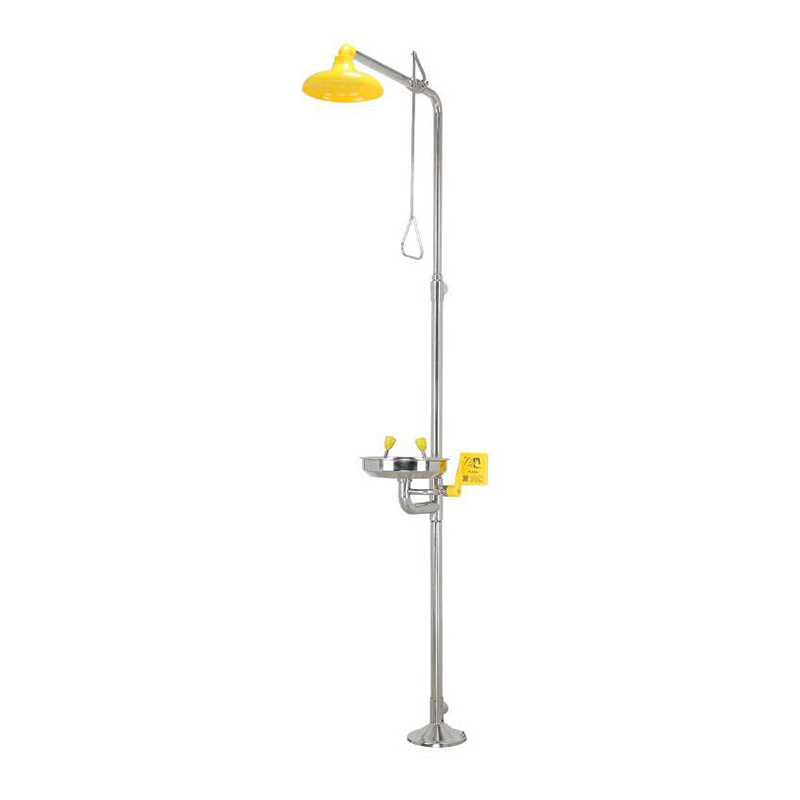
Vessels utilize different equipment types depending on deck layouts and water access. You must apply specific care routines based on the design of the unit.
A plumbed marine eyewash station for ships connects directly to the internal potable water network. These systems offer unlimited water supply but demand specific mechanical checks.
Focus on Line Pressure: Marine pumps can cause pressure spikes. Ensure the station flow restrictors function correctly to prevent eye injury from high-velocity streams.
Clear Pipe Scale: Onboard piping generates internal scale. Flush lines aggressively to push this scale out.
Inspect Inline Strainers: Locate the hidden mesh strainers. Open them up and remove trapped mineral blockages quarterly.
Test Mixing Valves: Thermostatic mixing valves balance hot and cold lines. Test them to verify they respond correctly to temperature fluctuations.
Some deck areas lack direct pipe access. Self-contained units solve this problem but introduce fluid management challenges.
Strict Fluid Replacement: You must replace the water schedule strictly. Follow a 3 to 6-month cycle depending on the specific preservative used.
Bacteriostatic Additives: Never use plain tap water alone. You must mix specialized bacteriostatic additives with potable water. This prevents dangerous microbial growth inside stagnant tanks.
Sanitize Before Refilling: Empty the tank completely. Scrub the interior to remove slick biofilm before adding fresh water and chemicals.
Pressure Gauge Checks: Some self-contained models use compressed air. Check the pressure gauge weekly. Top up the air charge if it drops below the manufacturer's recommended green zone.
Saltwater inevitably degrades even the highest quality equipment. You need a structured approach to evaluate hardware wear. Knowing when to swap a part versus replacing the entire unit saves time and ensures crew safety.
Not all rust requires a total replacement. Surface rust often wipes away using a mild abrasive pad and stainless steel cleaner. However, you must identify irreversible wear immediately. Pitted valves represent a severe safety hazard. Deep pitting destroys the internal seal, causing continuous leaks. Compromised bowl integrity also demands attention. If a plastic bowl shows deep UV cracks, it will shatter upon impact. Finally, test the actuation push-handles. A stiff, grinding handle indicates internal corrosion. If lubrication fails to fix it, you must take action.
Evaluate your repair paths carefully. Piecemeal repairs seem cheaper initially. Replacing a single spray head, a rusted valve, and a clogged strainer takes labor time. Compare these piecemeal material and labor costs against upgrading the whole unit. Often, buying a newer marine-grade stainless steel or ABS plastic unit proves more economical. A new unit guarantees immediate ANSI compliance. It resets the clock on wear and tear. Constant tinkering on an obsolete, ten-year-old station wastes valuable engineering hours.
Fleet managers gain tremendous operational efficiency through standardization. Mixing five different brands of safety stations across a single vessel creates chaos. Standardizing equipment simplifies your maintenance training. Crew members learn one cleaning routine. Furthermore, it streamlines your spare parts inventory. You only need to stock one type of replacement valve or dust cover. This reduces storage footprint and eliminates confusion during urgent repairs.
Component Condition | Recommended Action | Urgency Level |
|---|---|---|
Light surface rust on stainless bowl | Clean, polish, and apply protective marine wax. | Low |
Missing or cracked plastic dust covers | Order OEM replacements and install immediately. | Medium |
Valve weeping or stiff push-handle | Replace entire valve assembly. Do not attempt internal repair. | High |
Deep pitting on main supply pipe/frame | Scrap unit. Replace with new marine-grade station. | Critical |
Ship engineers cannot manage every compliance detail alone. Leveraging professional support networks reduces risk and lightens the daily workload.
Always source Original Equipment Manufacturer (OEM) parts. Generic plumbing fixtures from a local hardware store pose a massive risk. A standard commercial shower head delivers a completely different spray pattern than a safety nozzle. Installing generic parts alters the calibrated flow rates. This action immediately voids your ANSI compliance. Reliable marine equipment after-sales support guarantees access to the exact certified components your system requires.
ANSI demands a comprehensive annual inspection. This goes far beyond the weekly 3-minute flush. You must conduct precise flow-rate testing using specialized gauges. You must measure water dispersion patterns. Outsourcing these annual audits adds immense value. Specialized technicians utilize calibrated tools to measure performance accurately. They provide official recertification documents. These certificates act as a powerful defense during stringent maritime regulatory inspections.
Establishing a deep relationship with a dedicated supplier unlocks scalability. Managing safety stations across twenty vessels requires extreme organization. A strong supplier relationship ensures predictable maintenance schedules. They can set up automated replacement reminders for self-contained fluids. You will never miss a 6-month fluid change deadline again. Furthermore, they enable rapid deployment of critical spares to ports worldwide. This prevents a vessel from being delayed due to a single broken valve.
Diligent maintenance remains the only way to guarantee a marine eyewash station functions during a critical emergency. You only have a 10-second window to reach a station after chemical exposure. A rusted valve or clogged nozzle turns a manageable accident into a lifelong tragedy. Proactive care, weekly flushing, and smart part replacement form the foundation of maritime safety. Safety officers and procurement managers should take immediate action. Audit your current onboard stations today. Review your weekly testing logs for accuracy and completeness. Finally, evaluate your current spare parts inventory to ensure you have OEM replacements ready for deployment.
A: ANSI Z358.1 requires a quick visual and operational flush weekly to clear pipes and verify readiness. Additionally, it mandates a comprehensive flow and functionality inspection annually.
A: Yes, but only if treated with a certified bacteriostatic preservative. Otherwise, stagnant tap water breeds harmful bacteria and dangerous biofilm inside the closed tank over time.
A: Address freezing risks by using trace-heated or specifically freeze-protected models. Manufacturers engineer these specialized units specifically for external, cold-weather marine environments.
A: Inspectors require up-to-date inspection tags physically attached to the unit. Furthermore, these tags must correspond exactly with the digital or physical logs kept in your safety management system (SMS) records.


