
English
Views: 0 Author: Site Editor Publish Time: 2025-11-17 Origin: Site


When it comes to water safety, few devices are as essential and lifesaving as the life jacket. Whether you’re sailing, kayaking, fishing, or working on offshore platforms, a well-designed life jacket can mean the difference between safety and tragedy. But have you ever wondered what materials make life jackets so buoyant, durable, and reliable?
This article explores what life jackets are made of, the science behind their buoyancy, how different materials affect performance, and how modern innovations continue to improve safety and comfort.
Before exploring the materials, it’s important to understand the core function of a life jacket: keeping a person afloat and reducing the risk of drowning.
A properly designed life jacket performs three key roles:
Provides buoyancy — It helps a person stay afloat even when unconscious.
Supports correct body position — It keeps the wearer’s face above the water to allow breathing.
Ensures visibility — Bright colors and reflective strips make it easier for rescuers to locate the person.
These functions are all influenced by the materials used in the jacket’s construction, which determine its buoyancy, strength, comfort, and durability.
A typical life jacket is made up of three major layers or elements, each performing a specific function:
Component | Function | Common Materials |
Outer Shell | Protects the inner foam and provides durability | Nylon, Polyester, PVC-coated fabrics |
Buoyant Core | Provides flotation by trapping air | Foam (PVC, Neoprene, or PE foam) |
Lining and Straps | Offers comfort and secure fit | Soft nylon lining, webbing straps, buckles, zippers |
Let’s examine each in detail.
The outer shell of a life jacket is the first line of defense against harsh marine conditions — UV rays, saltwater, oil, and physical abrasion. It must be strong, lightweight, and water-resistant.
a. Nylon and Polyester Fabrics
Most modern life jackets are made from high-denier nylon or polyester fabrics, usually ranging from 200D to 600D, which indicates their strength and durability. Nylon is valued for its smooth texture, flexibility, and quick-drying capability, making it comfortable to wear and easy to handle after exposure to water. On the other hand, polyester offers superior UV resistance and excellent abrasion protection, making it more suitable for long-term outdoor use under direct sunlight. Many high-quality life jackets incorporate ripstop fabric technology, where reinforced threads are woven into the material to prevent small tears from spreading. This ensures that the jacket remains durable and safe even after extensive use in harsh conditions, extending its overall lifespan and maintaining reliability during critical moments on the water.
b. PVC-Coated Fabrics
Some industrial or professional-grade life jackets feature PVC-coated nylon or polyester for enhanced performance. The PVC coating adds an extra layer of waterproofing and resistance to oil, salt, and dirt, making these life jackets exceptionally durable and easy to clean. This construction is particularly beneficial for marine workers, rescue teams, and heavy-duty water operations, where exposure to moisture and contaminants is frequent.
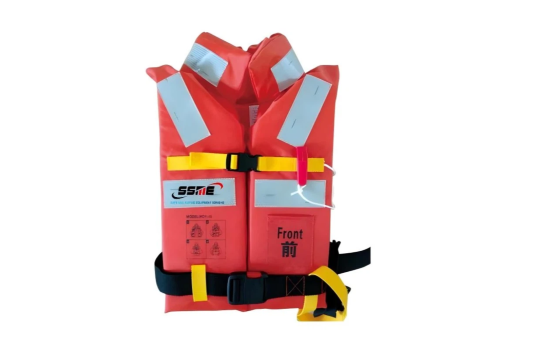
The buoyant material inside a life jacket is what keeps a person afloat. Different types of foam are used depending on the jacket’s purpose, cost, and design.
PVC foam is one of the most common buoyant materials used in inexpensive or recreational life jackets.
It is lightweight, closed-cell, and resistant to water absorption.
It provides excellent buoyancy and durability but can become less flexible in cold conditions.
PVC foam is a reliable and affordable option for general-purpose flotation devices.
PE foam is a popular alternative due to its superior flexibility, light weight, and chemical resistance.
It retains buoyancy over time and performs well in a variety of temperatures.
Many ISO- and CE-certified life jackets now use PE foam because it’s safer and more environmentally friendly than older materials.
Neoprene is a synthetic rubber material often used in high-performance or premium life jackets.
It provides softness, flexibility, and thermal insulation, making it ideal for water sports like jet skiing, surfing, or wakeboarding.
Neoprene fits snugly against the body, providing both buoyancy and warmth in colder waters.
While more expensive, neoprene jackets are favored for comfort and superior fit.
In inflatable life jackets, buoyancy is not provided by foam but by CO₂-filled air bladders.
When activated manually or automatically upon immersion, the CO₂ cartridge inflates the chamber.
These life jackets are compact and lightweight when deflated, making them popular among professional sailors and offshore workers.
However, they require regular maintenance and inspections to ensure reliability.
The inner lining of a life jacket ensures comfort and prevents irritation during prolonged wear.
Soft nylon or polyester fabric is commonly used for lining, offering a smooth feel against the skin.
Some premium designs include mesh panels for ventilation or quick-drying fabrics for enhanced comfort.
For children’s life jackets, inner padding may include breathable materials to reduce heat buildup and chafing.
Even the most buoyant life jacket won’t function properly if it doesn’t stay on the body. That’s why fit and fastening systems are crucial.
Straps: Usually made of high-strength nylon webbing, designed to withstand pulling and tension.
Buckles: Made from durable plastic or corrosion-resistant metal, allowing for quick adjustment and release.
Zippers: Often heavy-duty and rust-resistant, ensuring long-term use in saltwater environments.
Proper adjustment ensures the life jacket remains snug even if the wearer falls or flips into the water.
Different life jacket types use varying materials depending on their purpose.
Type | Common Use | Key Material | Buoyancy Type |
Foam Life Jacket | General recreation, boating | PVC or PE foam | Permanent buoyancy |
Inflatable Life Jacket | Sailing, offshore, fishing | Nylon shell with CO₂ bladder | Gas inflation |
Hybrid Life Jacket | Water sports, rescue operations | Foam + inflatable chamber | Dual buoyancy |
Neoprene Life Vest | Jet skiing, surfing | Neoprene foam | Permanent buoyancy |
Commercial/Industrial Jacket | Marine work, oil platforms | PVC-coated fabric with PE foam | Permanent buoyancy |
This variety allows users to choose a jacket that fits their environment, comfort level, and safety requirements.
The effectiveness of a life jacket lies in the principle of buoyancy, governed by Archimedes’ principle:
An object immersed in a fluid experiences an upward force equal to the weight of the fluid it displaces.
In simple terms, the foam or air inside the jacket displaces water, creating upward pressure that keeps the user afloat.
Materials like PE and PVC foam contain tiny closed cells filled with air, which do not absorb water. These air pockets provide consistent flotation even under compression or submersion.
In recent years, manufacturers have begun adopting eco-friendly materials to reduce environmental impact.
Some modern life jackets now feature recycled polyester shells or bio-based foam to minimize carbon footprint.
These sustainable alternatives maintain durability while reducing waste from traditional plastic-based materials.
Innovations like ventilated panels, ergonomic cuts, and stretchable neoprene make modern life jackets lighter and more comfortable. These designs encourage more people to wear them consistently — a critical factor in preventing drowning accidents.
Advanced life jackets may include automatic inflation sensors, GPS locators, or LED lights to enhance visibility and tracking during emergencies. While these features are optional, they demonstrate how technology is shaping the future of marine safety equipment.
Even the most durable life jacket requires proper maintenance to ensure continued performance.
Rinse after every use — Saltwater can corrode buckles and zippers.
Dry thoroughly — Avoid direct sunlight to prevent fabric degradation.
Inspect regularly — Check for tears, foam compression, or mold growth.
Test buoyancy annually — Ensure it still provides adequate flotation.
Replace when damaged — Compromised materials may fail when needed most.
For inflatable life jackets, inspect the CO₂ cartridge and trigger mechanism regularly to ensure proper inflation.
A life jacket may appear simple, but it’s a carefully engineered piece of safety equipment made from multiple specialized materials — from durable nylon shells to buoyant PE or neoprene foam cores and secure fastening systems. These materials work together to provide flotation, comfort, and safety in a wide range of water conditions.
As technology evolves, life jacket design continues to advance, incorporating eco-friendly materials, smart sensors, and ergonomic comfort features — all aimed at saving more lives on the water.
If you’re looking to learn more about high-quality life jackets, their construction, or customization for marine, industrial, or recreational applications, consider visiting www.ssmemy.com. The company offers a wide range of professional marine safety products and can provide guidance on selecting the right life jacket for your needs.


