
English
Views: 0 Author: Site Editor Publish Time: 2026-09-03 Origin: Site


Marine environments destroy exposed safety gear rapidly. Constant salt spray, intense ultraviolet radiation, and extreme temperature fluctuations degrade materials meant to save lives. Unprotected lifebuoys face a severe dual risk onboard any vessel. First, they risk failing stringent port state control (PSC) inspections, leading to operational delays and citations. Second, material fatigue prevents them from providing life-saving buoyancy during a man-overboard (MOB) emergency.
A lifebuoy storage box acts as a primary risk-mitigation asset. It shifts the operational focus from merely having a lifebuoy onboard to ensuring its long-term operational readiness. Proper enclosures guarantee immediate accessibility for rescuers while maintaining strict regulatory compliance. Shielding safety appliances from the elements ensures that when seconds count, the equipment functions exactly as designed without hesitation or failure.
Asset Protection: A marine lifebuoy storage box extends the lifespan of life-saving appliances by shielding them from UV radiation, moisture, and physical impact caused by extreme weather.
Regulatory Readiness: Proper storage ensures equipment remains in inspection-ready condition, supporting SOLAS and local maritime compliance.
Strategic Positioning for Rescue: Enclosures ensure that lifebuoys and their automatic flares are within easy reach of potential rescuers, saving critical seconds when time is of the essence.
Material Selection Matters: Evaluating construction materials (e.g., FRP vs. Polyethylene) is critical for balancing upfront costs with long-term durability in harsh marine conditions.
Integrated Storage: High-quality boxes accommodate not just the ring, but essential marine lifebuoy equipment like heaving lines and self-igniting lights for rapid, snag-free deployment.
A lifebuoy storage enclosure is a specialized housing unit designed specifically for marine safety applications. It houses, protects, and facilitates the rapid release of a lifebuoy. The core function of a lifebuoy is providing immediate buoyancy to prevent drowning. Environmental degradation or improper storage must never compromise this function. The enclosure acts as the first line of defense against the harsh realities of the open ocean.
Vessel operators often weigh the differences between open mounting brackets and fully enclosed units. Basic mounting brackets hold the ring in place but leave the equipment entirely exposed. Rain, salt, and sun constantly batter the foam and reflective tape. In contrast, a fully enclosed lifebuoy protection box provides a physical barrier. Full enclosures are mandatory for specific use cases, including offshore oil platforms, deep-sea commercial vessels, and coastal facilities that experience severe seasonal weather patterns.
Establishing clear success criteria for these enclosures is necessary for effective procurement. A successful storage solution must balance absolute physical protection with instantaneous accessibility. If a box requires more than a few seconds to open, it fails. If the design hinders proper grab-and-throw deployment techniques, it fails its primary purpose. The latching mechanism must yield instantly to human force while remaining secure against gale-force winds and heavy seas.
We see many variations in door designs across different vessels. Drop-down doors utilize gravity to assist in opening, which works well in icy conditions where hinges might freeze. Side-hinged doors require less clearance space on narrow decks. Regardless of the door style, the internal cavity must hold the ring securely without wedging it in place. The crew must be able to extract the ring with one hand while holding onto the ship's rail with the other.
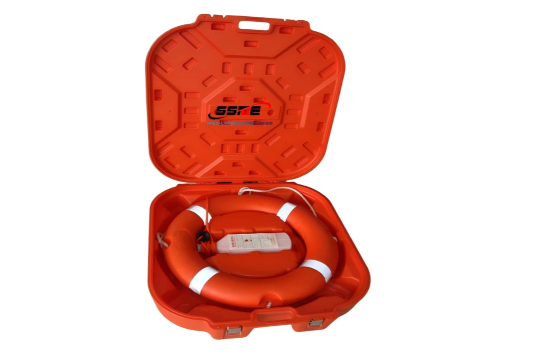
Environmental degradation is relentless on the open water. Ultraviolet radiation causes photochemical breakdown in polymer chains. This UV degradation specifically targets the polyurethane foam and the retro-reflective tape on the lifebuoy. Over time, the bright orange color fades to a dull yellow, and the tape loses its reflective properties. Saltwater ingress and extreme weather further compromise the structural integrity of exposed rings. Micro-cracks form in the outer shell, allowing water to seep into the foam core. A waterlogged lifebuoy loses its buoyancy, rendering it useless during a rescue.
Regulatory compliance dictates strict adherence to international safety standards. SOLAS (Safety of Life at Sea) outlines specific requirements regarding the readiness, positioning, and condition of all marine life saving equipment. Port state control inspectors actively look for equipment degradation. Common PSC deficiencies include faded outer shells, cracked plastic, missing grablines, and improperly stored lifebuoys. Failing an inspection due to degraded safety gear results in immediate operational delays and mandatory corrective actions before the vessel can leave port.
Ensuring rapid deployment for rescuers is the ultimate goal of proper storage. A dedicated lifebuoy box for ship decks prevents equipment from being tied down tightly with rope, obstructed by cargo, or misplaced by crew members during routine maintenance. In a man-overboard emergency, time is the most valuable factor. A standardized box ensures the ring remains exactly where the vessel's safety plan dictates. This predictability facilitates immediate and correct deployment operations, allowing the crew to react purely on training rather than searching for missing gear.
Consider a winter transit through the North Atlantic. Freezing spray coats the decks and all exposed equipment in thick ice. An exposed lifebuoy frozen to its bracket requires a hammer to break free. A crew member wasting minutes chipping ice off a lifebuoy is a catastrophic failure of safety planning. An enclosed box protects the ring from ice accumulation. The rescuer simply breaks the tamper seal, opens the door, and deploys the dry, unfrozen ring immediately.
Selecting the right construction material determines the lifespan and reliability of the enclosure. Fiberglass Reinforced Plastic (FRP) is a traditional and highly effective material. The manufacturing process involves layering glass fiber mats with specialized marine resins. The primary pros of FRP include high structural rigidity, excellent weather resistance, and a very long operational lifespan. FRP enclosures withstand heavy impacts from waves without deforming. However, the cons include a heavier overall weight, which requires stronger bulkhead mounting points. FRP also carries a potential for surface gel-coat cracking under severe blunt impact from heavy machinery or cargo operations.
High-Density Polyethylene (HDPE) and UV-stabilized plastics represent the modern alternative. These materials are typically rotationally molded or injection molded. The pros of HDPE include being exceptionally lightweight, highly impact-resistant, and completely immune to rust or galvanic corrosion. They bounce back from physical impacts that might crack fiberglass. The cons involve thermal stability. Non-stabilized or lower-grade plastics may warp under extreme, prolonged heat in tropical climates. Ensuring the plastic is heavily UV-stabilized during the manufacturing process is non-negotiable.
Hardware and component evaluation separates premium enclosures from inadequate ones. The structural integrity of the box relies entirely on its hinges and latches. Enclosures require 316 marine-grade stainless steel hinges, latches, and mounting hardware. Using lower-grade steel or aluminum leads to rapid galvanic corrosion in saltwater environments, causing hinges to seize and latches to fail. The exterior must also feature photoluminescent signage and high-visibility gel coats. SOLAS orange is the standard color, ensuring the marine lifebuoy storage box remains highly visible during power outages, heavy fog, or nighttime emergencies.
Material Type | Primary Advantages | Primary Disadvantages | Best Use Case |
|---|---|---|---|
Fiberglass Reinforced Plastic (FRP) | High rigidity, extreme weather resistance, long lifespan, easily repairable. | Heavier weight, potential for surface cracking under blunt impact. | Deep-sea commercial vessels, offshore oil rigs, harsh winter environments. |
High-Density Polyethylene (HDPE) | Lightweight, high impact resistance, immune to rust, cost-effective. | Can warp under extreme heat if not properly UV-stabilized. | Coastal vessels, passenger ferries, tropical operational zones. |
Rotational Molded LLDPE | Seamless construction, uniform wall thickness, superior impact absorption. | Requires specialized manufacturing, limited color customization options. | High-traffic workboats, tugs, and offshore support vessels. |
Dimensional accuracy is paramount when selecting an enclosure. The internal diameter of the box must precisely match the standard lifebuoy sizes used on the vessel. Common maritime standards dictate the use of 24-inch (610mm) or 30-inch (762mm) rings. Buyers must match the box internal dimensions to these specific sizes. Adequate clearance inside the box is mandatory. If the fit is too tight, the ring will jam during extraction. A jammed lifebuoy during a panic-driven rescue attempt wastes valuable seconds and endangers the person in the water.
Accommodating different weight classes and essential accessories requires careful internal design. Storage needs differ significantly between standard 2.5kg lifebuoys and heavier 4.3kg lifebuoys. The 4.3kg variants are specifically designed to be paired with man-overboard (MOB) smoke and light signals or automatic flares. The extra weight helps pull the flare from its mounting bracket when thrown. The enclosure must support this extra weight without the bottom panel sagging over time. The mounting points inside the box must handle the dynamic load of a 4.3kg ring slamming against the door during heavy rolling.
The box must also integrate storage for additional marine lifebuoy equipment. This includes 30-meter buoyant heaving lines and self-igniting lights. The internal layout must separate the heaving line from the ring to prevent tangling. Dedicated hooks or molded recesses keep the rope coiled neatly. When the rescuer pulls the ring, the self-igniting light and the heaving line must deploy seamlessly alongside it. Tangled lines halt the deployment mid-air, causing the lifebuoy to fall short of the victim.
We recommend standardizing the internal layout across the entire fleet. If a deckhand transfers from one vessel to another, they should know exactly where the heaving line sits relative to the ring. Consistency in equipment layout reduces cognitive load during high-stress emergencies. The marine lifebuoy equipment must slide out smoothly, regardless of the angle of the ship's list.
Strategic positioning ensures structural integrity and rapid access during an emergency. Identify optimal mounting locations based on the vessel's safety plan. Equipment must be within easy reach of potential rescuers. Prime locations include areas near gangways, muster stations, and bridge wings. Bridge wing placements are essential for lifebuoys connected to automatic flare release mechanisms. The structural backing required to secure the box against heavy seas must be robust. Use heavy-duty backing plates behind the bulkhead to distribute the load. Mounting orientations vary between vertical and horizontal setups depending on deck space. Regardless of orientation, quick-release mechanisms must remain unobstructed and intuitive to operate.
Drainage and ventilation prevent the formation of internal micro-climates. A completely sealed box without airflow is dangerous. Temperature fluctuations cause condensation to build up inside the enclosure. Without proper drainage holes or ventilation louvers, this trapped moisture creates a humid micro-climate. Constant dampness leads to mold growth and severe degradation of the synthetic heaving line. It also corrodes the battery terminals on self-igniting lights. Ensure the enclosure features downward-facing weep holes that allow water to escape while preventing rain from entering.
Routine inspection protocols maintain operational readiness. Implement a realistic and strict maintenance schedule for the deck crew. Consistent maintenance guarantees the equipment is ready for immediate operation.
Verify the bulkhead structural integrity before drilling mounting holes.
Apply marine-grade sealant around all drilled holes to prevent water ingress into the ship's superstructure.
Use nylon washers between the stainless steel bolts and the box material to prevent stress fractures and galvanic corrosion.
Mount the box at chest height to ensure ergonomic access during an emergency.
Test the door swing clearance to ensure no deck fittings obstruct the opening path.
Check all stainless steel hinges for free movement and apply marine-grade lubricants.
Clear drainage weep holes of salt buildup, dirt, or insect nests.
Open the enclosure and verify that the internal equipment remains completely dry.
Inspect the heaving line to ensure it is neatly coiled and untangled.
Test the latch tension to ensure it holds firmly but releases instantly when pulled.
Wipe down the exterior photoluminescent tape to remove soot and salt residue.
Procuring safety equipment requires strict attention to certifications and type approvals. Instruct purchasing departments to verify that the supplier provides equipment manufactured under recognized quality management standards, such as ISO 9001. The materials used in construction must meet strict marine flammability and UV resistance baselines. Request material data sheets to confirm the presence of UV inhibitors in plastic models or the specific resin grades used in fiberglass models. Uncertified equipment poses a massive liability risk during PSC inspections and actual emergencies.
Customization and fleet standardization add significant operational value. Evaluate suppliers based on their ability to provide standardized solutions across an entire fleet of vessels. Uniform equipment reduces crew confusion when transferring between ships. Look for suppliers that offer custom stenciling services. Having the vessel name and port of registry stenciled directly onto the box in weather-resistant marine paint ensures compliance with local maritime regulations without requiring the crew to apply temporary stickers that peel off in the sun.
Partnering with a reliable lifebuoy storage box supplier guarantees consistent material quality and timely delivery for fleet-wide upgrades. A reputable manufacturer understands the brutal realities of the marine environment. They design their enclosures with proper drainage, marine-grade hardware, and exact dimensional tolerances. Selecting a proven supplier ensures that the safety equipment onboard remains protected, compliant, and ready to deploy for over a decade of harsh service.
When evaluating potential suppliers, request physical samples of the latching mechanisms. The latch is the most common point of failure on inferior products. A high-quality supplier will use heavy-duty, spring-loaded stainless steel catches that do not rely on cheap plastic components. You should also inquire about the availability of replacement parts. A broken hinge should not require the replacement of the entire enclosure. Good suppliers maintain an inventory of spare hardware for quick dispatch.
Audit your current vessel safety plans and physically inspect all deck-mounted life-saving appliances for UV degradation or water ingress.
Measure the exact outer diameter and weight of your existing lifebuoys to ensure compatibility with new enclosures.
Contact a certified supplier to request technical drawings and material specifications for FRP or HDPE storage solutions.
Schedule the installation of new storage boxes during your next port call or scheduled dry dock period.
A: No. Boxes are manufactured in specific internal diameters, typically designed for standard 24-inch or 30-inch rings. Buyers must accurately measure their existing rings and match the box dimensions to ensure proper clearance and prevent jamming during extraction.
A: A properly designed box actually speeds up deployment. By preventing rope tangles, protecting the heaving line from environmental degradation, and utilizing intuitive quick-release latches, the enclosure ensures the ring is ready for immediate grab-and-throw operation without hesitation.
A: SOLAS mandates that all life-saving equipment must be kept in a state of continuous readiness and protected from environmental damage. While the specific use of a fully enclosed box versus a bracket depends on vessel type, exposure levels, and flag state interpretations, boxes are widely considered best practice.
A: Fiberglass Reinforced Plastic (FRP) and UV-stabilized High-Density Polyethylene (HDPE) are the industry standards. FRP offers maximum rigidity and lifespan for harsh environments, while HDPE provides a lightweight, highly impact-resistant, and rust-proof alternative for coastal operations.
A: Yes. Properly sized and designed boxes feature internal layouts specifically molded to hold the ring alongside mandatory accessories. This includes 30-meter buoyant heaving lines, self-igniting lights, and automatic flares, keeping them organized and tangle-free.
A: Maintenance involves quick, routine checks. Clear all drainage weep holes of debris, lubricate the stainless steel hinges and latches to prevent seizing, and wipe down the exterior shell to maintain high visibility and remove corrosive salt buildup.
A: A high-quality enclosure typically lasts between 7 to 15 years. The exact lifespan depends heavily on the material quality, the level of UV stabilization, and the severity of the operational environment the vessel operates in.


