
English
Views: 0 Author: Site Editor Publish Time: 2026-09-15 Origin: Site


Port State Control (PSC) inspections regarding MARPOL Annex I compliance are escalating in stringency. Illegal discharge or equipment failure presents a severe financial, legal, and reputational risk to ship owners and operators. Bilge water is not a uniform fluid. It is a complex, constantly changing mixture of fuel, lubricating oils, cooling water, soot, and cleaning chemicals. Standard separation equipment frequently fails when encountering modern chemical emulsions, fluctuating oil-to-water ratios, or poor operational practices.
Maintaining consistent compliance requires understanding the exact chemical, physical, and mechanical variables that dictate separator efficiency. This guide breaks down the performance factors, technology evaluation criteria, and implementation realities for selecting and operating marine environmental protection equipment.
Chemical Emulsification is the Primary Failure Point: The introduction of surfactant-based cleaning agents and extreme pH levels (below 4 or above 10) prevents effective oil-water separation in legacy systems.
Physical Variables Dictate Throughput: Fluid temperature, viscosity, and pump-induced mechanical shear directly impact the physical limits of gravity and coalescing separation phases.
Technology Must Match Bilge Complexity: A standard gravity-based marine oily water separator is insufficient for modern vessels; a specialized bilge separator for emulsified oil is required to consistently meet the 15 ppm threshold.
The International Maritime Organization (IMO) enforces strict discharge limits for engine room runoff. Under MEPC.107(49), vessels cannot discharge water containing more than 15 parts per million (ppm) of oil. You must monitor this discharge continuously using an approved oil content monitor (OCM). The OCM analyzes the effluent stream in real-time using light scatter or infrared technology. If the effluent exceeds the 15 ppm limit, automated stopping devices—typically a pneumatic or electric 3-way valve—must immediately halt the overboard discharge. The valve redirects the non-compliant water back to the bilge holding tank. Meeting this threshold requires reliable marine oil water separator equipment that functions consistently under variable conditions. Port State Control officers routinely test this 3-way valve during inspections. A failure here results in immediate vessel detention.
Most modern separation systems utilize a multi-stage approach to handle different states of oil. The primary stage relies on gravity separation. This chamber slows the fluid velocity, allowing large, free-floating oil droplets to rise to the surface. Operators then skim this accumulated waste oil into a dedicated sludge tank using manual or automated heating and discharge valves. The secondary treatment stage targets the remaining fluid. This stage uses coalescing filters, membrane barriers, or chemical flocculation to capture microscopic oil droplets that gravity alone cannot separate. The secondary stage ensures the final effluent meets the regulatory standard before it reaches the OCM.
You must understand the physical difference between free oil and emulsified oil to operate these systems effectively. Free oil floats naturally. It forms a distinct layer on top of the water. The primary gravity chamber easily removes it. Emulsified oil presents a significant technical challenge. Mechanical shear from pumps or chemical agents from cleaners break oil into microscopic droplets. These droplets remain suspended in the water column. They do not rise to the surface, regardless of how long the water sits. A standard marine oily water separator struggles with emulsions because the droplets pass right through basic coalescing media. Advanced secondary treatment is mandatory to break these chemical bonds and capture the suspended oil.
Modern systems must meet specific performance benchmarks beyond simply passing a factory test. They must operate continuously without requiring frequent manual intervention from the engineering watch. They must log discharge data accurately for PSC inspectors, storing records for at least 18 months. Furthermore, they must demonstrate resilience against variable influent compositions. A reliable system handles sudden shock loads of high-concentration oil without failing. It maintains a steady processing rate while keeping the effluent strictly below the 15 ppm limit. Equipment that requires constant filter changes or manual tweaking is not fit for purpose on a commercial vessel.
Engine room cleaning chemicals often contain surfactants. Surfactants are the primary cause of chemical emulsification in bilge water. These molecules feature a hydrophilic (water-loving) head and a lipophilic (oil-loving) tail. They attach to oil droplets and lower the interfacial tension between the oil and water. This prevents the oil droplets from merging together. Traditional coalescing filters become completely ineffective when surfactants are present. The oil simply passes through the filter media, triggering a 15 ppm alarm.
You must audit the cleaning chemicals used in your engine room. Ensure all degreasers and solvents are compatible with your separation equipment. Eliminating surfactant-based cleaners is often the single most effective way to improve performance. Switch to quick-separating cleaners designed specifically for marine environments. This simple operational change prevents emulsions from forming in the holding tank.
The pH level of your bilge water directly affects separation efficiency. Extreme pH levels alter the electrostatic charge of suspended oil droplets. Highly acidic water (pH below 4) or highly alkaline water (pH above 10) causes droplets to repel each other. This repulsion stabilizes the emulsion. The oil remains trapped in the water column, bypassing gravity and coalescing stages entirely.
Boiler blowdown water, air conditioning condensate, and acidic scrubber wash water frequently enter the bilge holding tank. These fluids disrupt the pH balance of the entire mixture. You should monitor the pH of your holding tanks regularly. Segregate highly acidic or alkaline drains from the main bilge well whenever possible. Maintaining a neutral pH environment allows the primary gravity chamber to function correctly.
Solid contaminants act as stabilizing agents for emulsions. Soot from exhaust leaks, rust from aging pipework, and metal shavings bind with oil and water to form Pickering emulsions. These solid particles create a physical barrier around the oil droplets. This barrier prevents the droplets from coalescing into larger, buoyant masses. The resulting mixture is highly stable, heavy, and difficult to process.
High suspended-solid loads also cause rapid degradation of secondary treatment stages. Particulate matter quickly fouls coalescer beds and membrane filters. This fouling increases differential pressure across the filter. It forces operators to replace consumable elements frequently, leading to unnecessary downtime. Implementing pre-filtration strainers helps capture large solids before they enter the main processing unit. Duplex strainers allow crews to clean one basket while the other remains in operation, ensuring continuous flow.
Contaminant Type | Source in Engine Room | Impact on Separation | Mitigation Strategy |
|---|---|---|---|
Surfactants | Deck cleaners, degreasers, hand soaps | Lowers interfacial tension, creates stable micro-emulsions | Use only quick-separating, marine-approved chemicals |
Extreme pH Fluids | Boiler blowdown, battery acid, scrubber drains | Alters droplet charge, causes electrostatic repulsion | Segregate drains; neutralize pH in holding tanks |
Particulate Matter | Soot, rust, grinding dust, heavy sludge | Forms Pickering emulsions, blinds coalescing filters | Install pre-strainers; maintain clean engine room bilges |
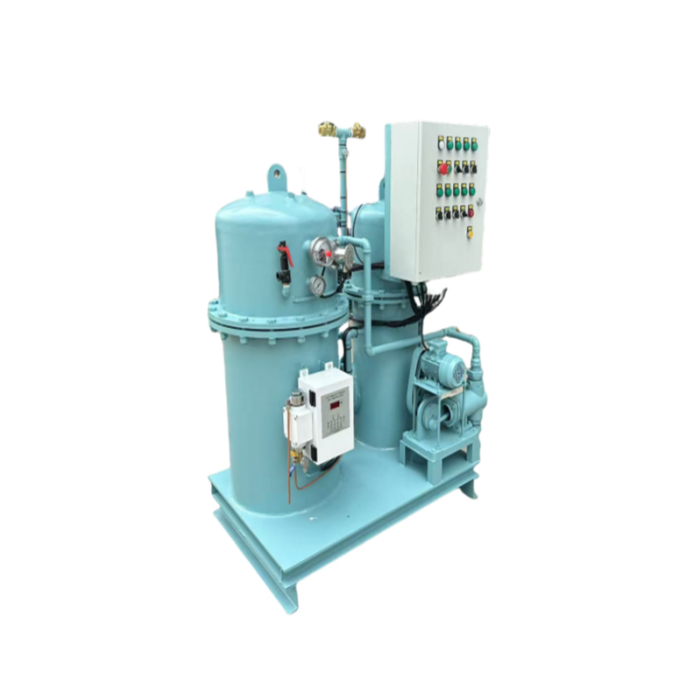
The fluctuating mix of oil and water changes how well the separator works. Bilge water composition is never static. Sometimes the system processes mostly water from cooling leaks. Other times, it encounters a sudden shock load of high-concentration oil from a blown hydraulic line or a fuel filter change. Standard systems often fail during these shock loads. The sudden influx overwhelms the primary chamber, pushing pure oil into the sensitive secondary filters.
Your equipment must handle these variations automatically. Advanced systems use capacitance sensors to detect heavy oil concentrations. They automatically adjust flow rates or trigger oil discharge valves to prevent overwhelming the secondary stage. Proper holding tank management also mitigates shock loads.
Follow these steps to manage shock loads effectively:
Sound the bilge holding tank daily using water-finding paste to determine the exact oil-to-water interface.
Activate the tank heating coils to 40-50°C to encourage natural separation before processing.
Allow the tank to settle for a minimum of 24 hours without adding new fluids.
Manually drain the free water from the bottom of the tank directly to the separator.
Transfer the top layer of concentrated free oil directly to the waste oil sludge tank, bypassing the separator entirely.
Stokes' Law governs the physical mechanics of gravity separation. The law states that the rise rate of an oil droplet depends on the density difference between the oil and water, the size of the droplet, and the fluid's viscosity. Increasing the temperature of the bilge water reduces its viscosity. It also increases the density difference between the oil and water. These two factors accelerate the rise rate of oil droplets significantly.
Slightly increasing the temperature in the bilge settling tank improves overall efficiency. Warmer water allows smaller droplets to break free and float to the surface. However, you must balance this operational tactic against energy trade-offs. Excessive heating consumes unnecessary power and may cause certain chemicals to react unpredictably. Maintain a moderate, consistent temperature in the settling tank for optimal results.
Feed pump selection heavily influences separation success. High-shear centrifugal pumps spin rapidly, shattering oil droplets into micro-emulsions. Feeding a separator with a centrifugal pump guarantees poor performance. The mechanical shear creates droplets too small for gravity or basic coalescers to capture.
You must use low-shear positive displacement pumps. Progressive cavity pumps are the industry standard for this application. They utilize a helical rotor spinning inside a synthetic rubber stator. This design moves the fluid gently without emulsifying the oil. Additionally, you must regulate the flow rate carefully. Pushing fluid through the system faster than its design capacity prevents the oil from having enough time to rise. Always operate the feed pump within the manufacturer's specified flow limits.
Marine environments present unique hydrodynamic challenges. The pitch, roll, and heave of a vessel disrupt the laminar flow required for effective gravity separation. In a static environment, oil rises smoothly. On a moving ship, internal turbulence mixes the oil and water back together. This turbulence degrades the efficiency of the primary chamber.
Manufacturers design internal baffles and weir plates to counteract vessel motion. These structures calm the fluid and maintain laminar flow despite the ship's movement. When evaluating equipment, consider its internal geometry. Systems with robust baffling perform significantly better in rough seas than empty cylindrical tanks.
Traditional plate-type and coalescing filter systems struggle with modern engine room runoff. These legacy systems rely entirely on physical buoyancy and basic surface tension. They work well in highly controlled environments with zero chemical use. However, they fail consistently when faced with surfactant-rich emulsions or high particulate loads.
You can still use these systems if you enforce strict source control. If you prevent all chemicals, soot, and rust from entering the bilge, a basic coalescer might suffice. In reality, maintaining such a pristine bilge is nearly impossible on a working commercial vessel. Most fleets require more advanced technology to ensure compliance.
Meeting modern regulatory demands requires advanced secondary treatment. You need a specialized bilge separator for emulsified oil. Several technologies exist to tackle this challenge.
Flocculation and Coagulation: These systems dose specific chemicals into the bilge water. The chemicals break the emulsion bonds and cause the oil droplets to clump together. The larger clumps are then easily removed. This method is highly effective but requires careful management of chemical consumables.
Membrane Filtration: Ultrafiltration and reverse osmosis systems use physical barriers to block oil. The microscopic pores in the membrane allow water to pass but trap oil molecules. Cross-flow filtration designs sweep the membrane surface to prevent buildup. This provides a highly reliable 15 ppm bilge separator output. You must protect membranes from heavy solid loads to prevent rapid fouling.
Biological Treatment: Emerging bioremediation technologies use microorganisms to consume organic waste in the holding tanks. These systems break down oil and chemicals before they even reach the separator. They require specific temperature and aeration conditions to keep the bacteria alive.
Proactive bilge management prevents problems before they start. You must implement strict source control in the engine room. Use drip trays under all pumps, filters, and valves to minimize oil ingress. Segregate clean drains from oily drains. Never allow raw fuel, heavy sludge, or concentrated cleaning chemicals to enter the primary bilge well.
Proper bilge holding tank management is equally important. Allow the tank contents to settle for at least 24 hours before processing. Drain the free water from the bottom and skim the free oil from the top manually. Feeding a pre-settled mixture into your marine bilge water separator drastically improves its performance and extends the life of internal filters.
Complex systems often fail due to the human element. Improper operation, lack of routine maintenance, or bypassed alarms lead to non-compliance. You must train your crew thoroughly on the specific equipment installed on your vessel. They need to understand the physics of separation, not just which buttons to push. Routine calibration of the 15 ppm alarm is mandatory. Crews must flush the OCM with clean water after every use to prevent optical sensor fouling.
Modern systems feature intuitive Human-Machine Interfaces (HMI) to reduce the crew's burden. Look for equipment with automated back-flushing features and self-cleaning cycles. Automation minimizes manual intervention and ensures the system operates within its designed parameters. Clear, visual alarm indicators help the crew identify and resolve issues quickly.
Selecting the right equipment requires vetting a reliable bilge separator supplier. Demand verifiable IMO MEPC.107(49) type-approval certificates. Ensure the supplier maintains a robust global service network. You need access to spare parts and technical support wherever your vessel operates.
Retrofitting new equipment into existing engine room footprints presents engineering challenges. Measure your available space carefully. Discuss piping modifications and electrical requirements with your supplier. You must also integrate the new separator with your existing Oil Discharge Monitoring Equipment (ODME) and shipboard alarm systems. Seamless integration ensures the automated stopping devices function correctly during an alarm event.
The performance of a marine bilge water separator is not solely dictated by the equipment's design. It depends heavily on engine room chemistry, fluid physics, and operational discipline. Standard gravity systems cannot process modern chemical emulsions. Fleet managers must prioritize technologies engineered specifically for complex bilge mixtures. Combining advanced equipment with strict internal policies ensures consistent regulatory compliance.
Take the following actionable steps to improve your bilge management:
Conduct a comprehensive audit of all engine room cleaning chemicals and eliminate surfactant-based products immediately.
Inspect your bilge holding tanks and implement a strict pre-settling and manual skimming routine before operating the separator.
Verify that your feed pumps are low-shear positive displacement models operating at the correct flow rate.
Consult with a specialized supplier to evaluate the feasibility of retrofitting an emulsion-capable separator.
A: Under MARPOL Annex I, the maximum permitted oil content in discharged bilge water is 15 parts per million (ppm). You must continuously monitor this discharge using an approved 15 ppm bilge alarm. If the oil content exceeds this limit, the system must automatically stop the discharge.
A: Standard gravity separators rely on the natural buoyancy of oil. Emulsified oil, bound by surfactants or mechanical shear, features microscopic droplets that do not rise to the surface. These suspended droplets easily pass through traditional coalescing filters, resulting in non-compliant effluent.
A: Warmer temperatures reduce the viscosity of the water and increase the density difference between the oil and water. Slightly increasing the temperature in the settling tank accelerates the separation process. This allows smaller oil droplets to rise faster, improving overall efficiency.
A: Extreme pH levels (below 4 or above 10) alter the electrostatic charge of suspended particles. This causes chemical emulsification, making oil droplets repel each other and stay suspended in the water. Maintaining a neutral pH is necessary for effective separation.
A: Crews can dramatically improve performance by eliminating surfactant-based cleaners. They should utilize drip trays to minimize oil ingress, maintain optimal heating in the settling tank, and ensure low-shear pumps are functioning correctly. Proper source control prevents emulsions from forming.
A: Evaluate suppliers based on their verifiable IMO MEPC.107(49) type approvals. Ensure their technology handles complex emulsions effectively. Furthermore, verify they offer a strong global network for spare parts and technical support to minimize operational downtime.


